

We recently reported on the official UK release of Marseille Inc’s mClassic HDMI upscaler. We have since received one to test out and bring you our review. The concept behind the device is to bring the best out of old consoles that have a HDMI output. Think PlayStation 3, Xbox 360 and Wii U as examples. It promises to analyze each pixel and use algorithms to redraw each one so it’s as sharp as possible.
The mClassic also promises zero lag, balanced pictures and enhanced details. Its final trick is to upscale Nintendo Switch to up to 4K and give you the best possible picture you can get for the console. Marseille Inc. has explained that it can be used with retro consoles as long as you have a way to send the old analogue signal to an HDMI converter.
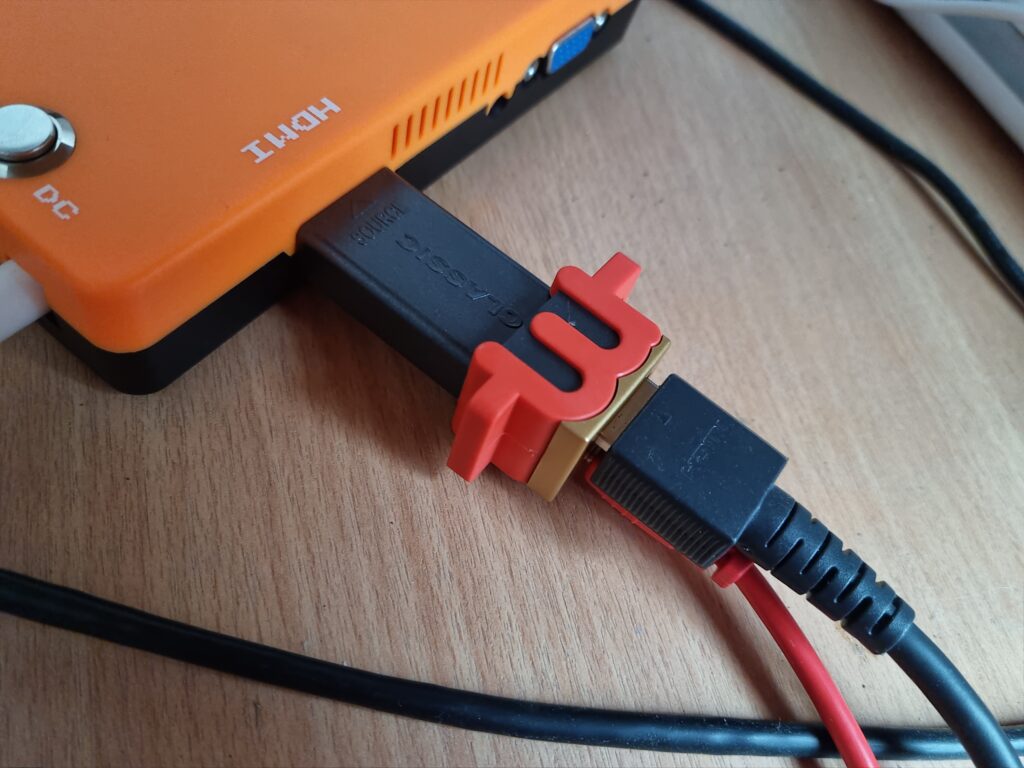

For our test, we used the mClassic with a PlayStation 3, Xbox 360, a Switch and an HDMI upscaler that had various retro consoles connected. The question we asked ourselves was whether or not the mClassic is worth the asking price, coming in at just under £100. This seems like quite a bit of money to outlay without the results being excellent.
The bottom line is that results were mixed with native HDMI consoles seeing a large boost to the graphics, especially in the depth of colours. HDMI consoles looked sharper, and brighter with defined lines on polygons. For the retro consoles, however, there seemed to be an overreliance on settings and fiddling with equipment to get any tangible upgrades.
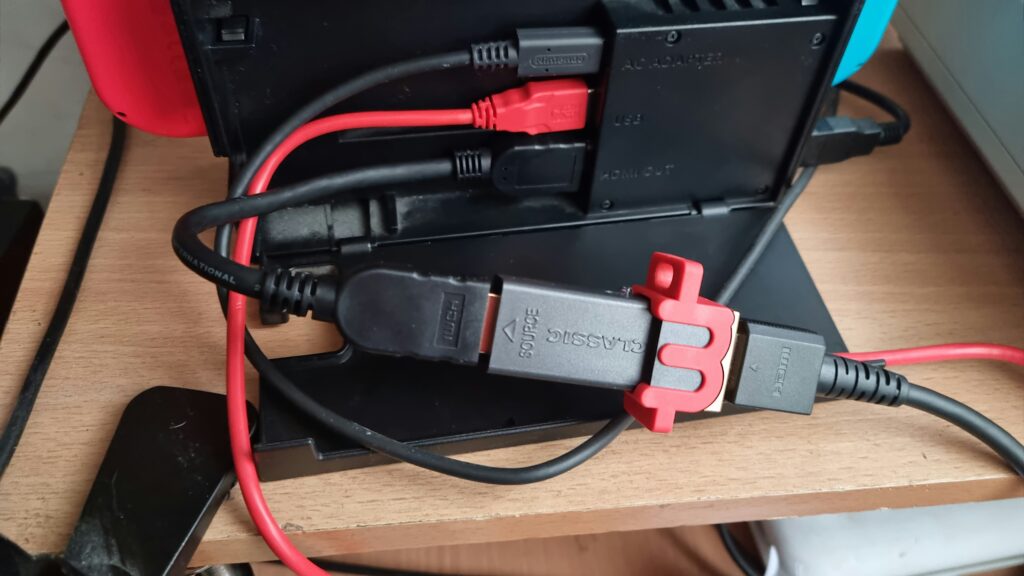
So how does the mClassic work? It’s a small device that sits between the console and the HDMI cable. Most consoles will allow you to simply plug this into the HDMI output and then add a cable between the device and your television. For the Switch, an extender dongle that allows the device to fit is included in the pack. However, this does make the set-up for your Switch a bit messy around the back as the image above shows.
The other factor to consider is that the mClassic requires power from a USB socket to operate. It’s doing a lot of graphical work behind the scenes and doesn’t get any power from the HDMI cable. This does mean anyone thinking of getting one will need to make sure that the setup has a spare USB socket. In our tests, the mClassic was powered through all the HDMI-enabled consoles we tried. For the retro tests, we did need to find an extra socket to power the USB cable.
It’s all simple to set up once you start and the mClassic has three simple modes. The first setting is ‘bypass’ which makes no difference to the output and simply passes the image from the console through to the display. The second, and one that will be of most benefit, is the standard upscale mode that is indicated with a green light. The last mode is a retro mode which forces the image into a 4:3 ratio once the image is passed through an upscaler or HDMI converter.
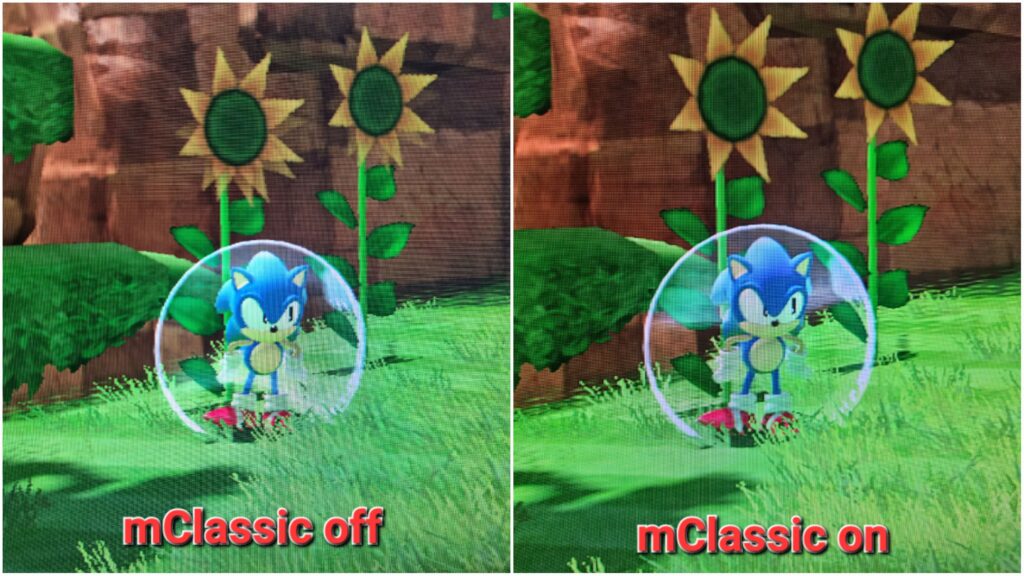
The first test was using the mClassic with a Switch coupled with a decent 1080p gaming monitor. The results were stark and switching between the off-setting and standard upscale modes saw instant results. The colours were richer, the polygons sharper and everything in the image had a surprising pop that really brought Sonic Superstars to life.
We then used the device with the Switch on a 4K television and the results improved even more. It’s surprising what the Switch is capable of when the standard 1080p graphics are upgraded to 4K. A word of warning though, the 4K Switch feature only works if your television also supports 2K resolutions. Otherwise, the results may not be as obvious. The overall result for the Switch was a win and made the standard Switch feel like a Switch Pro.
We then moved on to PlayStation 3 and found that most of the games we tried had instant improvements over the standard HDMI output. King of Fighters XIII shone through the screen and again, the colours were so rich and vibrant, textures razor sharp. It’s quite astonishing seeing just how great a 15-year-old game can look. We also tried PS1 and PS2 games on the same console and these had noticeable upgrades to the standard output.
We then turned our attention to Xbox 360 and tried Street Fighter IV and Sonic Generations. Seeing the level of detail on Street Fighter’s backgrounds was almost like playing a new game. The onslaught of colour when we pulled a Super Combo Finish was impressive and the deep blacks and fine lines on the character models made it look ultra sharp. Sonic was also much more defined and the lush greenness of Green Hill had new life breathed into it.
The 360 had mixed results when playing original Xbox games but Panzer Dragoon Orta had a new level of sharpness while Outrun 2 seemed to stutter a little in places as the graphics felt over-processed. Overall, the 360 does get a boost and similar to the PS3 seems to be where the most value for mClassic comes into play.
The final test was to use the mClassic with a truly retro console. For our test, we tried GameCube and Mega Drive connected via OSSC upscaler. The first thing to point out is that you will need to fiddle with settings on the upscaler to get the best results and make sure you’ve selected the retro mode on the mClassic as this will force a true 4:3 aspect ratio. We didn’t notice much difference with the Mega Drive as the upscaler does a lot of work on its own.
For the GameCube there was a definite difference between the sharpness of polygons on the Phantasy Star Online character models but whether this is a better look than the standard 480p output will vary on gamers’ tastes. Our feeling is that some games will see improvements while others will look uglier and it all seems to depend on how much detail the developers put into the original game. We did try to get a Dreamcast working with the mClassic but were unable to get a picture. We suspect this may be because the Dreamcast was heavily modified so that is another thing to consider when purchasing this.
All this leads us back to the original question. Is the mClassic worth £100? Does it provide enough upgrades to see enough difference? If you play a lot of Switch, 360 and PS3 then the mClassic is a big upgrade and coupled with a decent monitor or 4K television can produce some outstanding results that breathe new life into games. For retro consoles, the experience will depend on what you want from your retro games but we didn’t see enough difference to be able to recommend.
If you already have decent cables, displays and other upscaling kits then the mClassic is a worthy purchase, especially for those who love tinkering with tech and getting the best possible picture. If you don’t already have the right kit or play your games on an old television then you are better off putting the money towards upgrading that kit before purchasing a mClassic.


