Rainbow Skies is the latest release from publisher EastAsiaSoft and SideQuest Studios. It finds its way to the Switch after being released on PlayStation in 2018. It’s also the sequel to Rainbow Moon and follows the story of Danion who is looking to finish his monster trainer exams. Typically, everything goes wrong and Damion finds himself trying to sort things out while being stuck between two rival superpowers.
Rainbow Skies is a traditional RPG that uses a world map to join up the various battles that take place and move the story on. Different areas open up as you progress and there are random battles that appear that can be avoided if your team isn’t prepared or you’re focusing on moving a quest on. The world map uses real-time mechanics that switch between day and night while all the battles are turned-based.
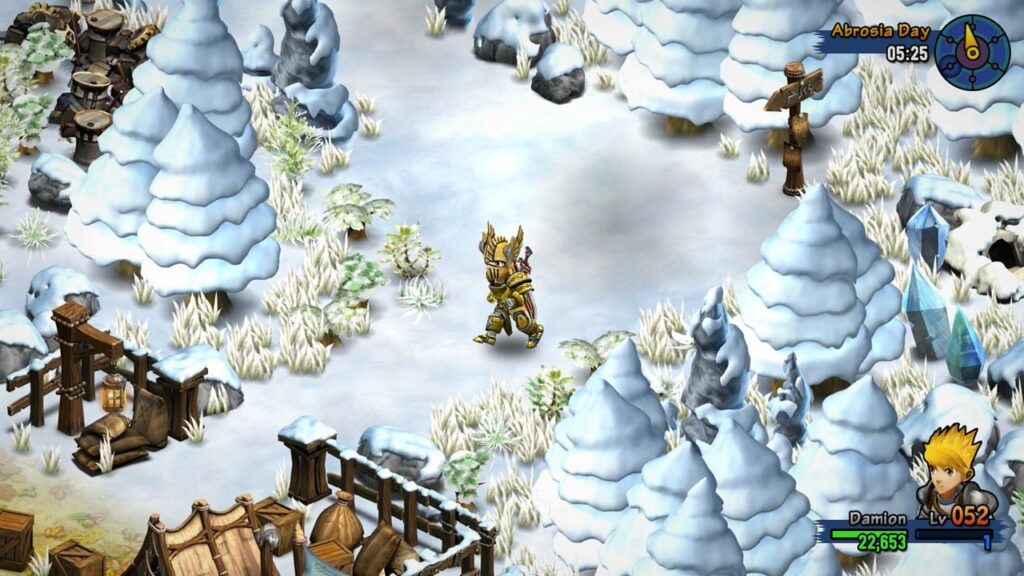
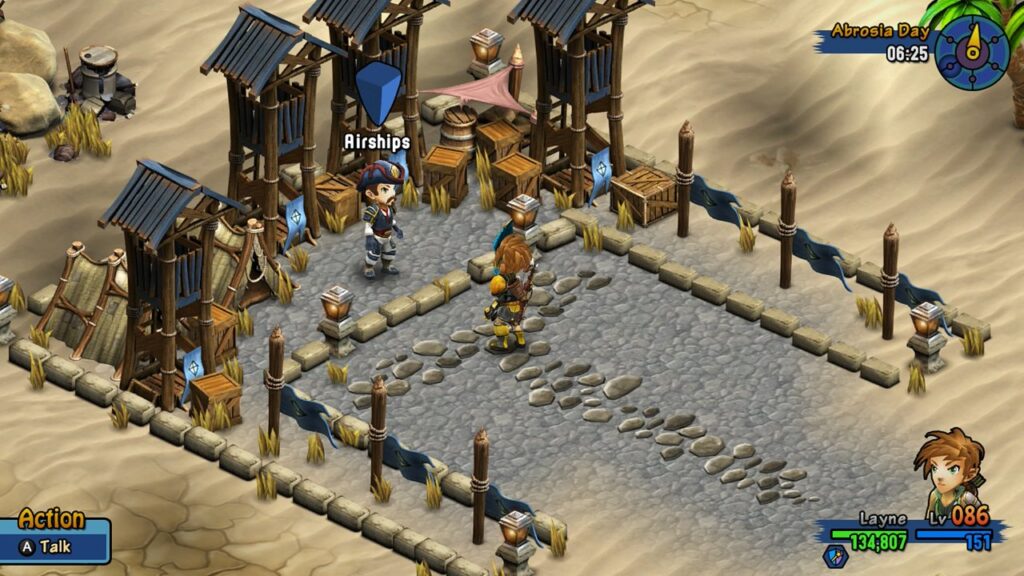
Once you get through the tutorial level, which introduces the main protagonist and your adventure, you build your team and follow trails to encounter monsters, discover secrets and visit towns filled with useful upgrades and pick-ups. The overworld map is colourful and has many terrains from lush forests to chilly snow peaks. Some of the artwork is quite beautiful at times and the visuals are clear as well as clean.
While every area has a distinct feel, the towns, shops and characters you encounter all feel the same. This is a shame as Rainbow Skies is a well-built game with excellent mechanics. The main issue is how many of the game NPCs don’t have a noticeable difference in their tone, humour or dialogue. The structure itself is fine but the overworld does become repetitive in places.
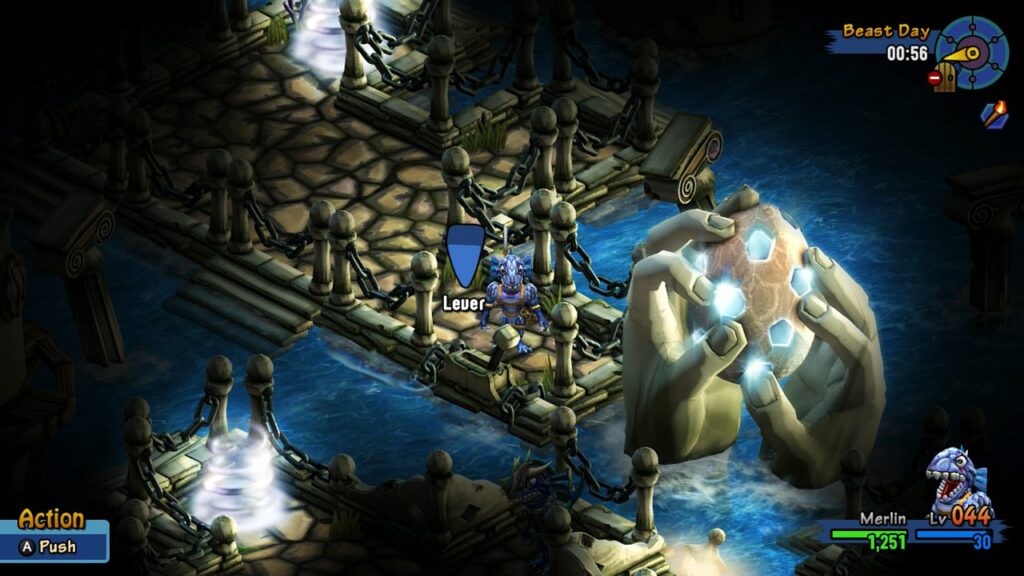
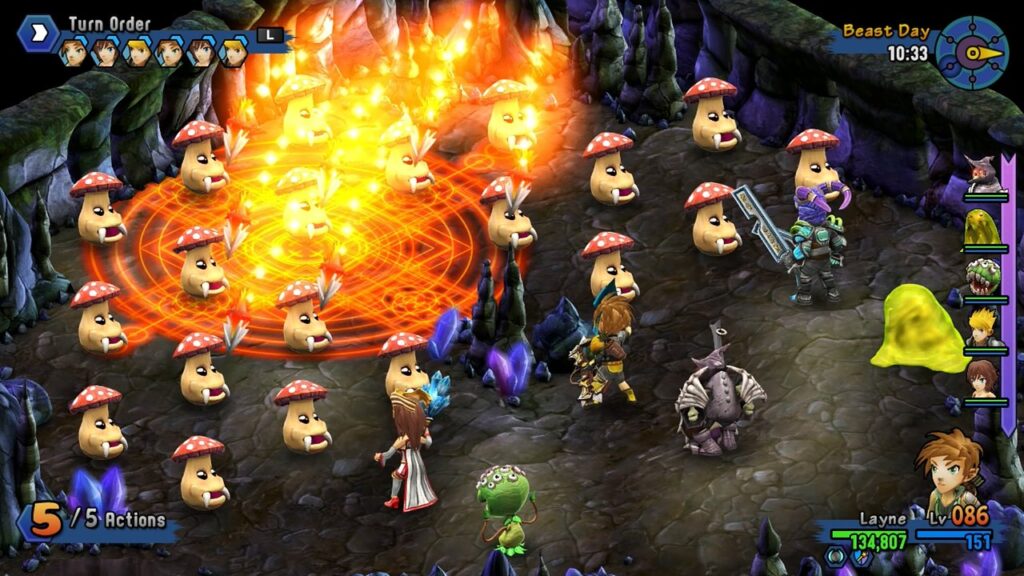
One aspect where Rainbow Skies does succeed is with the combat. Each battle is set within a small arena that uses a movement and attack system where each action uses an action point. Characters will start to obtain more action points as you progress with the skill trees laid out. You will need to decide when is best to defend, move, attack or use an item during each turn and the tactics are fun and engageing.
Fans of tactical RPGs will instantly recognise the squares that indicate a placement to either move into or attack if an enemy is occupying one. You can go deep or direct with your tactics and there is enough variety in the move sets to warrant experimentation. However, because your moves and attacks upgrade the more you use them you may tend to keep using the same attacks over and over.
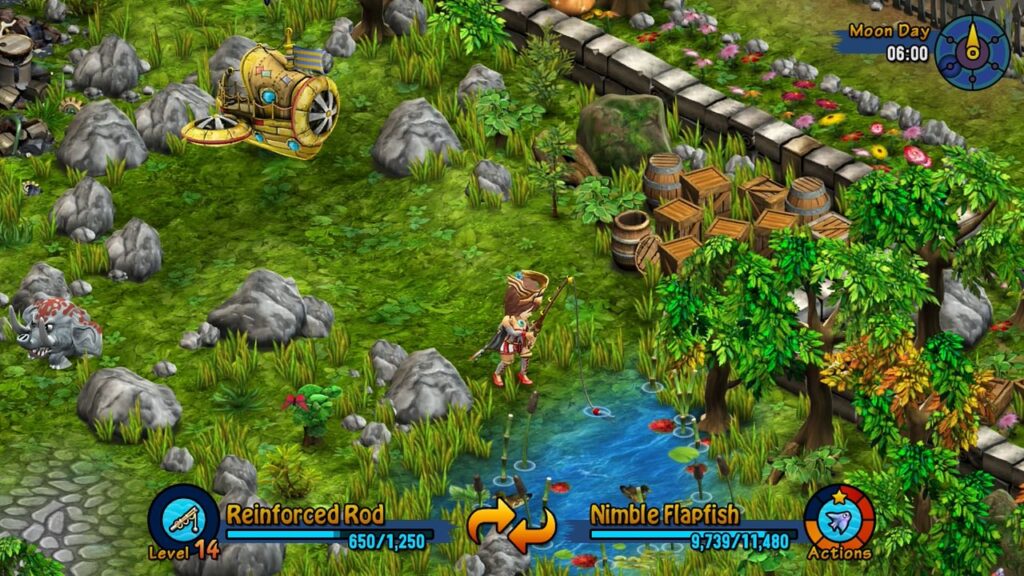

The upgrade system is interesting in Rainbow Skies. You can utilise pick-ups, level-ups and augmentations to improve each character and you will soon start honing in on their specialities. It’s not just your base skills that improve, you can add artefacts to your equipment as well as learn new spell categories. There is enough depth here to keep you interested and it never feels overwhelming once you learn the menus.
Overall Rain Skies is a solid RPG that will please fans of tactical games or those that implement party management. Those wanting a fully-fledged, engaging story may be left a little disappointed but there is a good world to explore with enough to make it worth a play-through. Retro RPG fans will appreciate the visuals and overall structure that feel a lot like Grandia 2.