With a returning cast of loveable characters, a refined combat system, a strong story, and some excellent presentation, Like a Dragon: Infinite Wealth is poised to be in the running when the accolades for game of the year are dished out this year. I don’t make that claim lightly either, this is a high-quality RPG romp that takes everything great about the series and amplifies it to the next level. It will please both strategy and adventure fans and those who enjoy a polished gaming experience.
The game has been developed by Ryu Ga Gotoku Studio and published by Sega. It’s out now on PC (reviewed here), Xbox and PlayStation. The standard edition of the game costs around £60 with a deluxe and ultimate editions costing around £75 and £95 respectively. Those wanting to play the entire game, including the additional harder modes after finishing the main game, or those wanting to obtain all the achievements and trophies, will need to purchase the additional content.
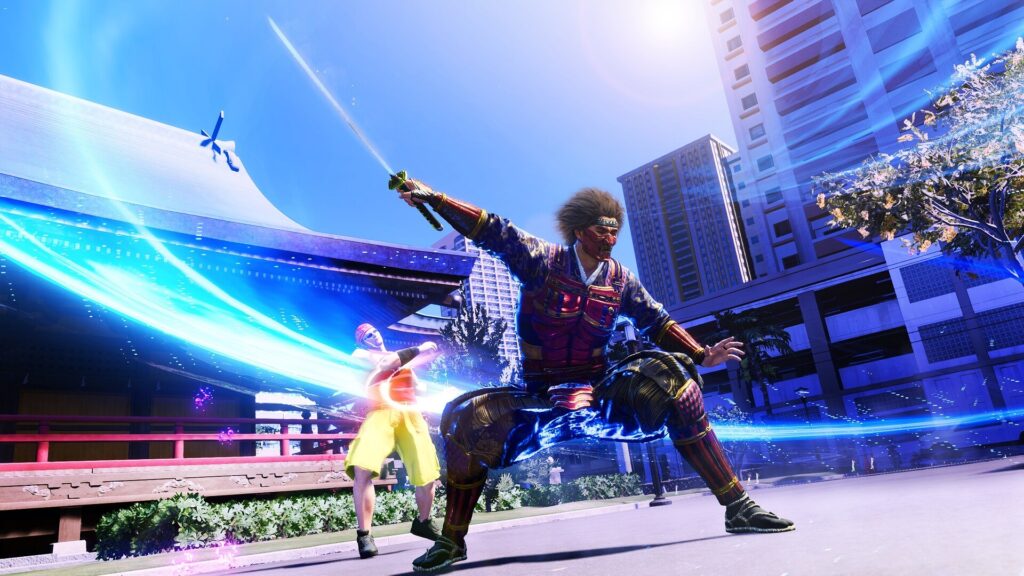

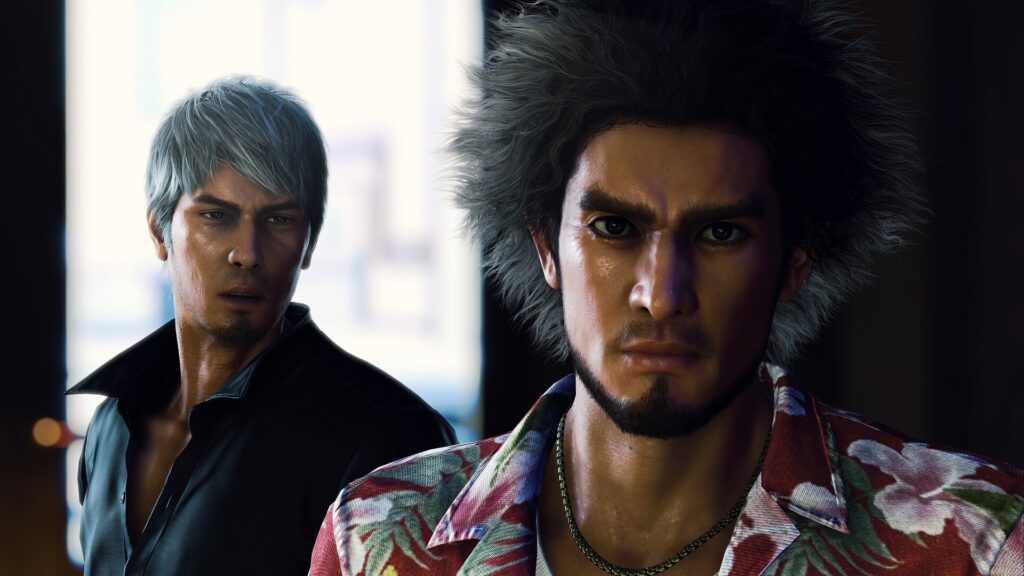
The story centres on Ichiban Kasuga, an ex-Yakuza who is asked to uncover a mystery surrounding his long-lost mother. He teams up with series veteran Kazuma Kiryu who is seeing out his last days after being diagnosed with a terminal illness. I’m keen not to give too much of the story away but during Like a Dragon: Infinite Wealth you will move between Yokohama in Japan and Honolulu in Hawaii. Quite early your team splits into two and you switch between the two territories during the game’s fourteen chapters.
The main story arc is a constant cat-and-mouse yarn to find Ichiban’s mother, and subsequently a mysterious young girl, and he is continuously foiled as they remain just out of reach. In between the chases, larger-than-life bosses, some of whom create intriguing twists and turns in the story, try to thwart you through epic chapter-ending battles. The story is kept to a good tempo throughout, with the only minor criticism being some of the cutscenes are a little long in places as details are repeated.
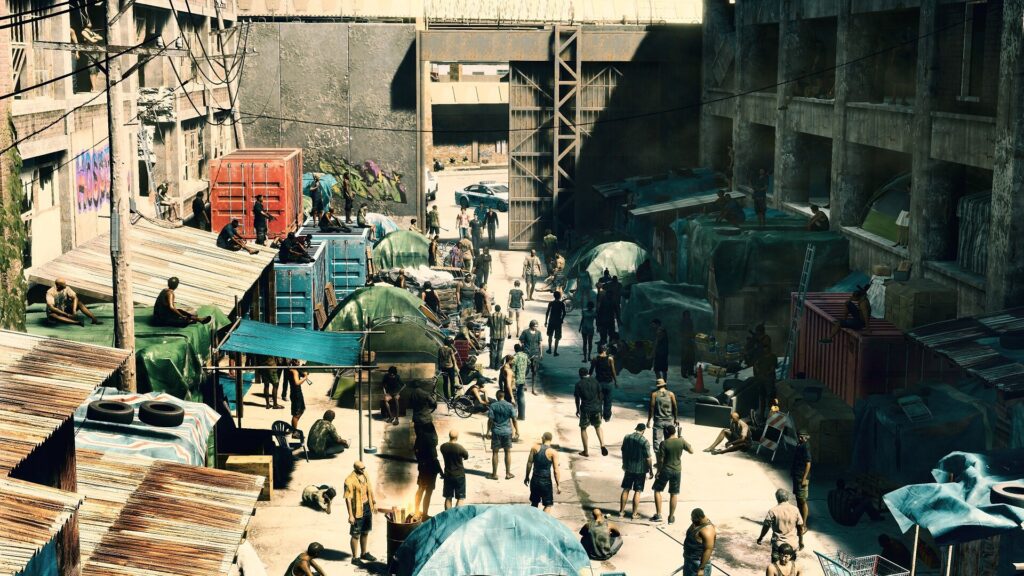
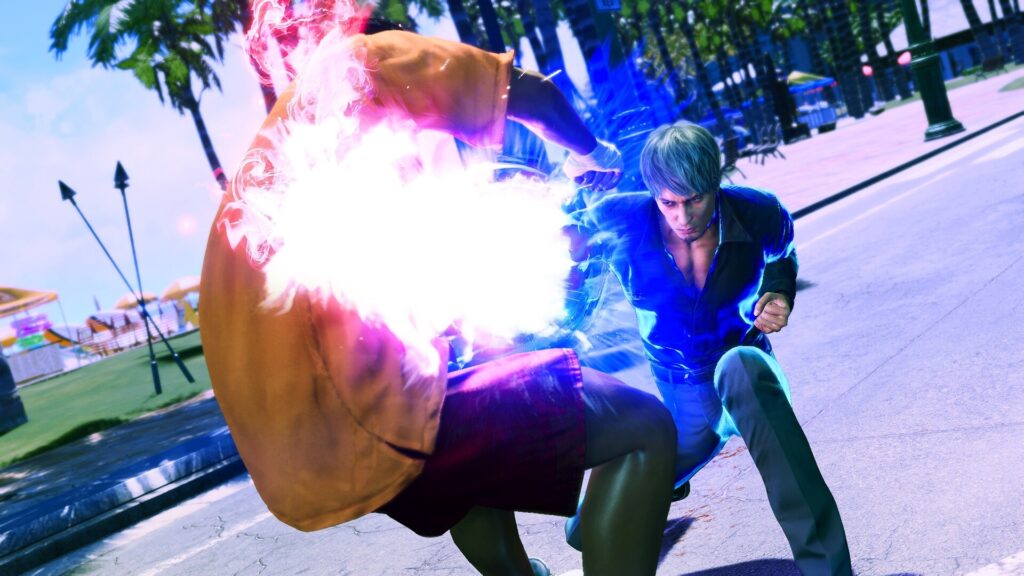
The combat system has been somewhat overhauled in Like a Dragon: Infinite Wealth. With previous games feeling stiffer in mechanics, I enjoyed the flexibility this new system offers. While it is still turn-based, there is a new emphasis on movement, using the surroundings and teamwork that allowed me to tackle each battle in different ways. There’s a great balance between standard moves and outlandish supers that require a mini cutscene that thankfully can be skipped after you enjoy it the first time.
Some of the battles were straightforward and simply required me to keep my team of four alive while others needed a little more thought. I would’ve liked to have seen a little more requirement to use support characters to apply buffs and debuffs to my team and enemies respectfully, but the quick nature of the turn-based may have suffered with more combat depth. While the battles are overall fun, most can be won by simply selecting the basic attack and just making sure you have enough health packs.
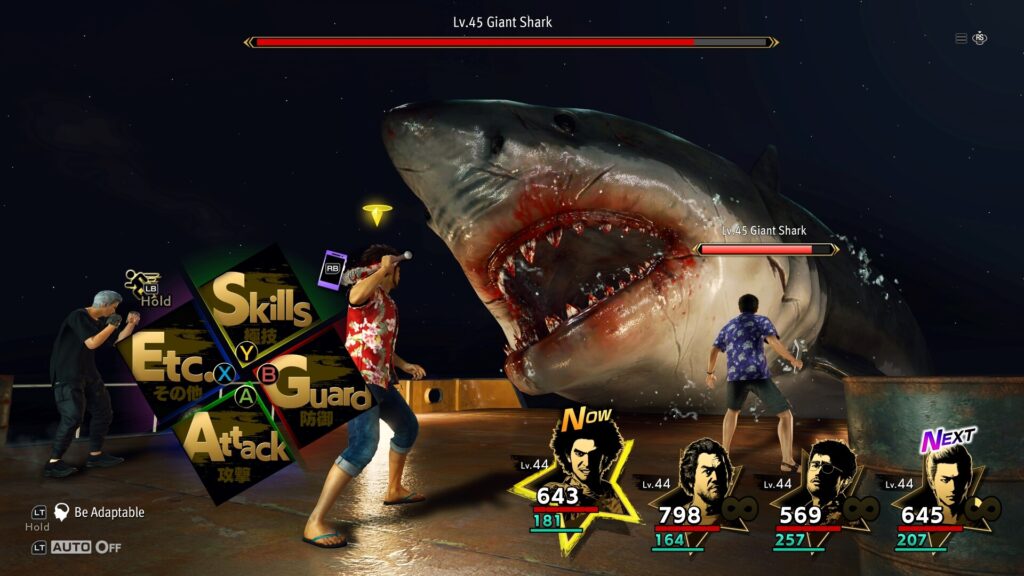
As with any RPG worth its weight, I expected a robust character level-up and weapon-crafting system. On the character front, I wasn’t disappointed, each character has a class, be it attack, defence or support. Each also has as a ‘job’ that acts as a sub-class and can help smooth out blindspots in your party’s abilities. While there isn’t any need to change class to finish the game, I did feel that it would allow me to change the way battles play out in another playthrough which ultimately gives further longevity.
I’ve already mentioned that I would’ve liked to have seen a little more variety in the character classes, and this rings true for my thoughts on the weapons and equipment. While some of the weapons you come across make a real difference to your character, others were less clear in how they improved my team. The same can be said for weapon crafting which allows you to upgrade your existing equipment or make entirely new ones. I usually love these aspects of RPG games but felt a little underwhelmed here.

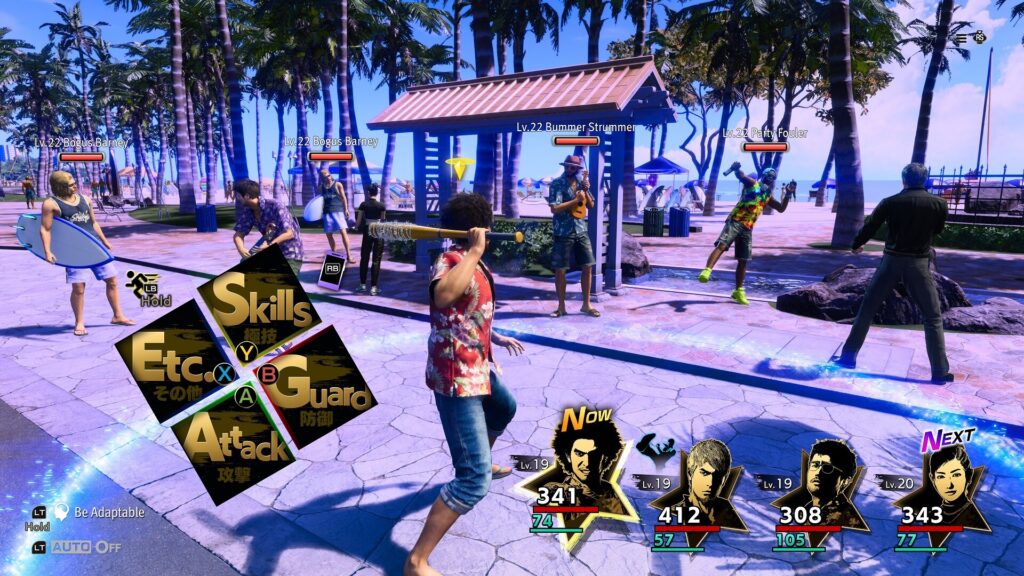
The open-world setting of Like a Dragon: Infinite Wealth is split between Japan and Hawaii with both areas being vibrant places filled with things to do, people to meet and tasks to achieve. As with the other games in the Yakuza series, there are many side missions to complete. I found that completing these would add extra equipment and experience points to make sure I was always the stronger team in a fight. No matter what corner of the map I went to, it felt as though there was always something to do.
There is also a whole set of mini-games to tackle that will keep completionists happy for many hours long after the final battle. For this review, I played about half of them and could see I would need to spend a lot of time outside the main game to see them all. The two main mini-games are a Pokemon-style battle challenge and an Animal Crossing-style building sim. Both of these could be short indie games in their own right which shows just how deep they go and how long you could be playing this title for.
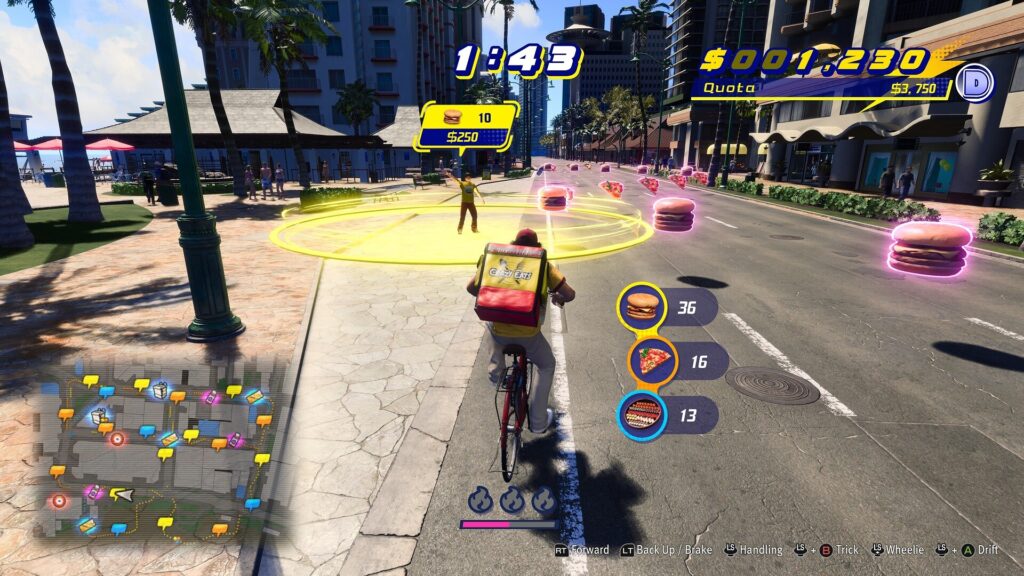
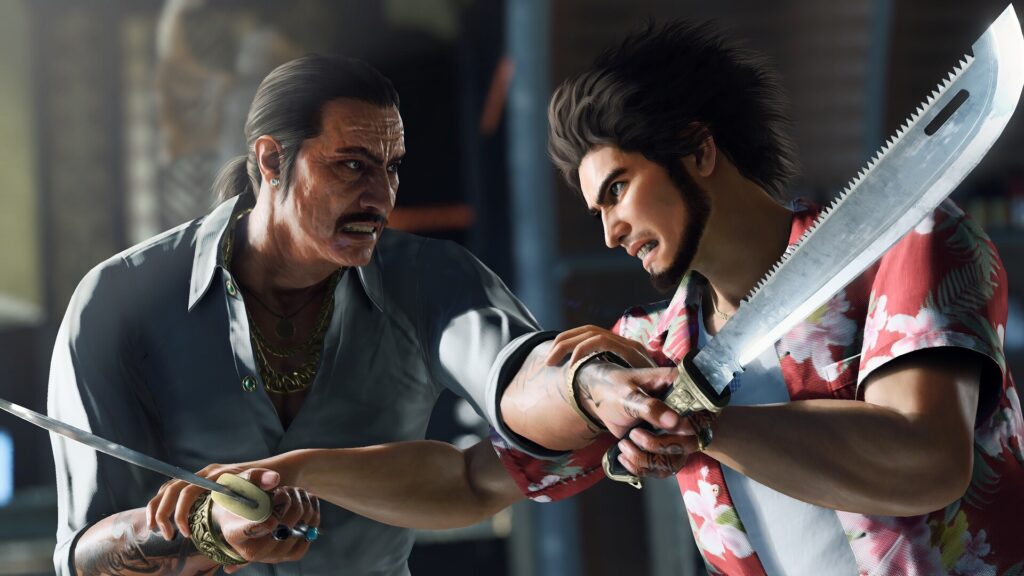
With all the gameplay, story and content to keep you busy, it’s impressive just how high-quality the overall presentation is in Like a Dragon: Infinite Wealth. I played this on my gaming PC and whacked all the settings up as much as possible. I planned to slowly reduce the graphical grunt as slowdown or performance issues arose but I’m happy to report that for everything going on in the game world, combat and cutscenes, this game runs amazingly. I experienced no issues with performance at any point.
The graphical detail and animation are of the highest quality throughout and I only noticed one or two moments, during cutscenes, where my immersion was broken due to a graphical flick or colour issue. But even mentioning these rare instances feels harsh. The overall presentation, especially seeing the sunsets in Hawaii, is outstanding throughout. This is one of the best-looking games I’ve played and while I can’t testify to the performance of the console versions, I’d imagine it’s just as good as it is on PC.
Overall, Like a Dragon: Infinite Wealth is a classy game that has an engaging, 40-hour+ story, smooth gameplay, lots of additional content to wade through and a polished look that comes together for the complete package. For hardened RPG fans, you may not quite get that depth to the combat you crave but there is just enough here to warrant your time. Anyone who has a fondness for the Yakuza series, or adventure games in general, can jump right into this excellent romp. Top stuff all around, almost flawless.